
The ‘Klarna Glitch’ Wasn’t a Glitch: The Fraud Playbook That Bypassed Traditional KYC
The Anatomy of a "Glitch": Why Stolen IDs Still Pass Your KYC
They call it a "glitch." We call it a massive blind spot in the modern risk stack.
In late 2025, a viral TikTok trend taught thousands of fraudsters how to "glitch" BNPL platforms for high-value electronics and cash disbursements. They didn't use sophisticated hacking; instead, they used stolen identity data and freshly minted email accounts that looked just legitimate enough to bypass traditional verification checks.
While legacy systems saw a "verified" customer, Heka saw a digital ghost.
Inside this whitepaper:
- Reverse Engineering: The exact fraud path that bypassed traditional KYC — step by step
- The Structural Blind Spot: Why stolen-but-valid identities passed automated verification at scale
- The Detection Signals: The real-time web-intelligence signals that stopped the attack instantly
- The Forward Risk: What this incident reveals about the next wave of first-party and socially amplified fraud
Don't let a "glitch" become your biggest loss category of 2026. Access the full report now.
Resource Posts
ONE DEVICE. SEVEN IDENTITIES.
One Device. Seven Identities. explores how darknet intelligence transformed four exposed credentials into a wider fraud investigation, uncovering seven active access paths linked to a single device and likely operator. Discover how identity and device correlation can reveal connected fraud networks hidden behind seemingly unrelated accounts.
Fraudsters Are Testing Your Fraud Stack Before You Do
AI-powered KYC simulators are giving attackers the ability to test and refine identities before they ever reach your systems. Discover what this shift means for fraud teams and why identity context and adaptive decisioning are becoming critical to staying ahead.
.png)
Account Takeover, Inside a Trusted Account
A trusted customer account can appear legitimate even after the identity behind it has changed. See how Heka connects digital footprint, breach, phone, and behavioral intelligence to uncover the warning signs traditional fraud controls miss.
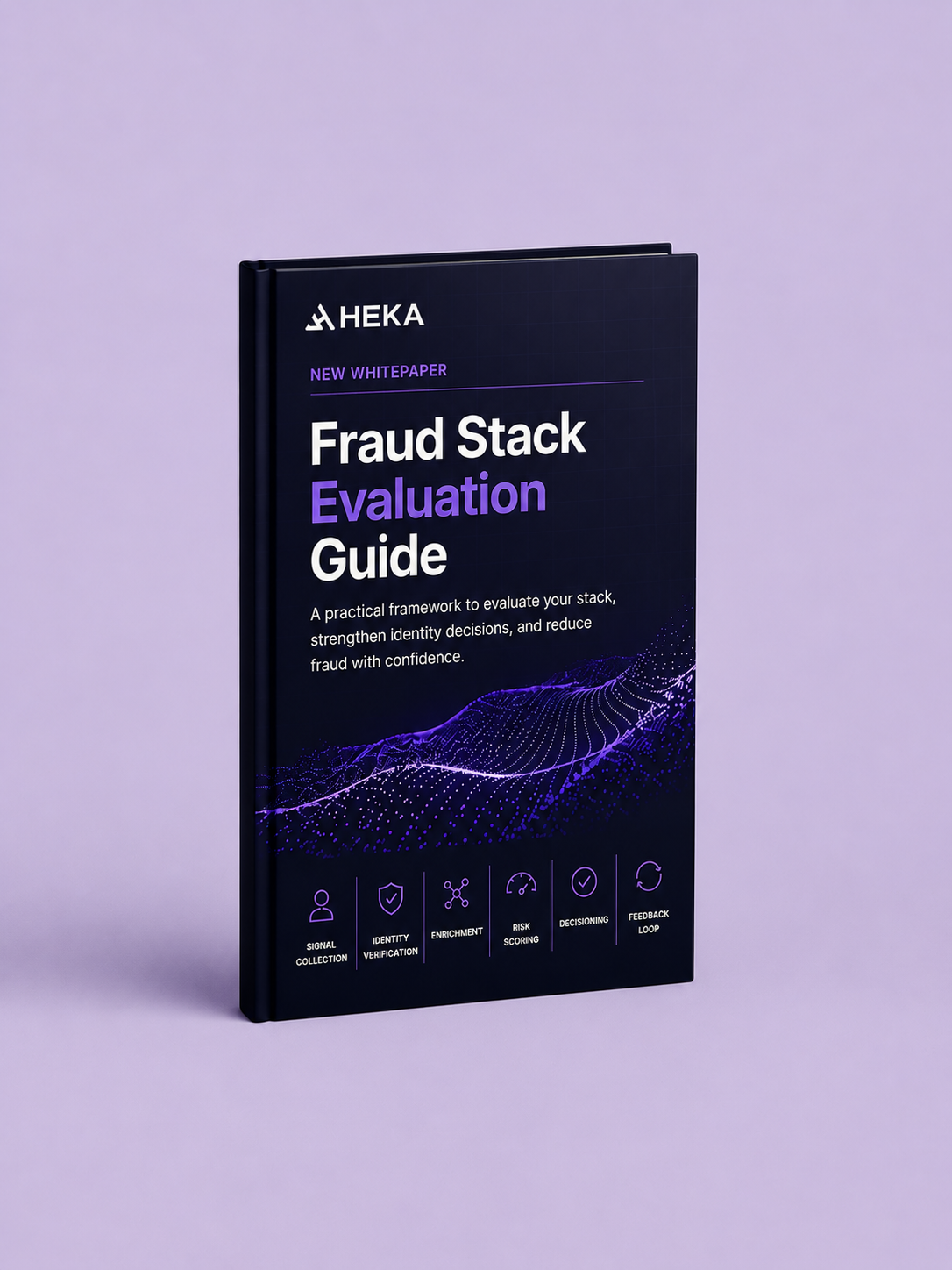
Rethinking the Fraud Stack: A Framework for Stronger Signals and Better Decisions
Most fraud systems don’t fail from missing pieces, they fail by trusting weak signals. Even when identities appear “verified,” hidden gaps allow fraud to slip through. This whitepaper explores where modern fraud stacks break, why deceptive identities pass, and how deeper identity context can reduce risk without adding friction.