Rethinking the Fraud Stack: A Framework for Stronger Signals and Better Decisions
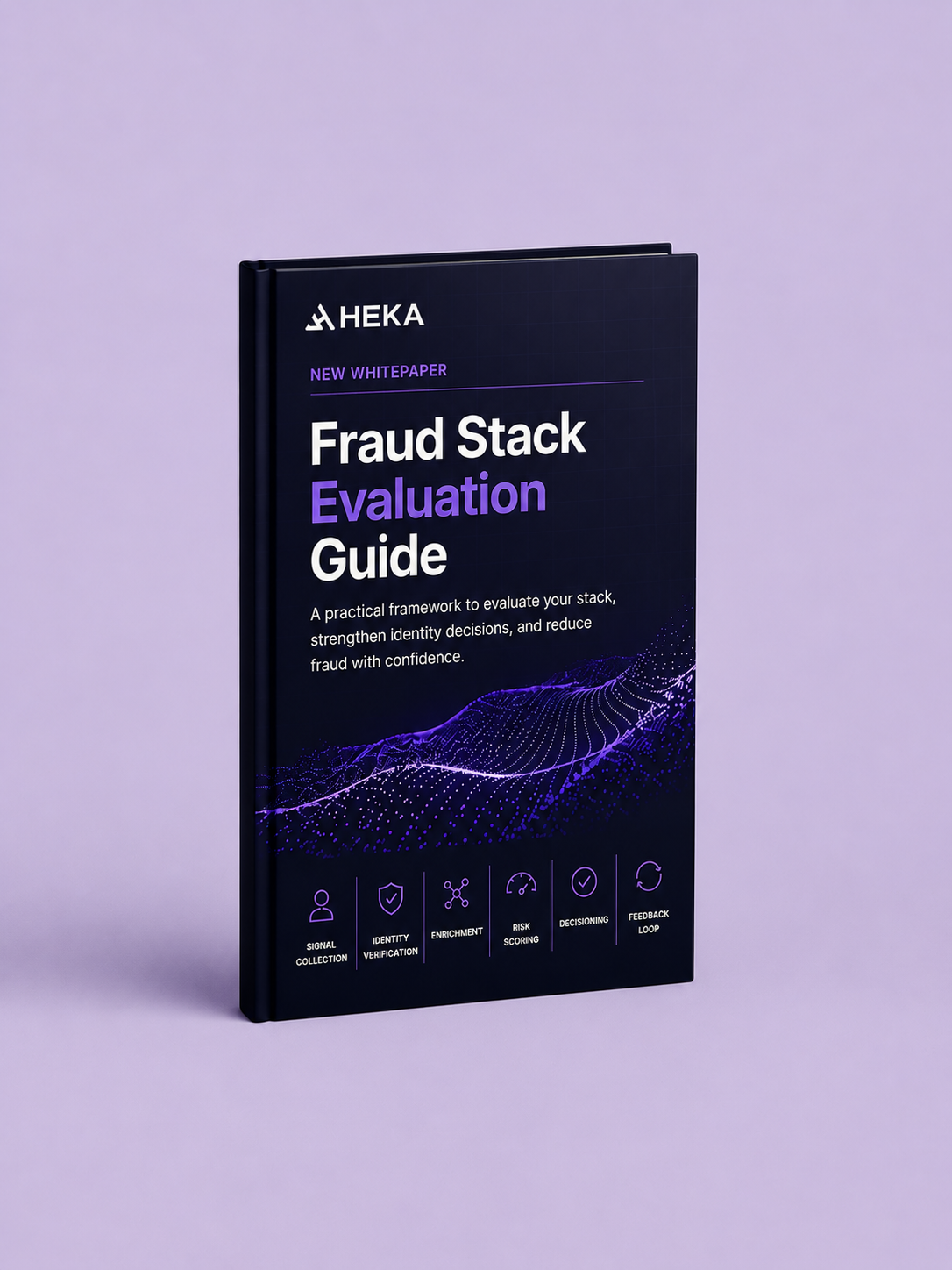
They call it a “complete stack.” We call it incomplete confidence.
Most fraud systems don’t fail because they’re missing components. They fail because they trust signals that were never strong enough to begin with. Across banks, lenders, and payment platforms, identity checks pass, scores look clean, and decisions feel justified, until fraud shows up anyway.
While legacy systems see a “verified” identity, Heka sees the missing context.
Inside this whitepaper:
The Hidden Gaps: Where modern fraud stacks generate false confidence, and why it goes unnoticed
The Design Patterns: How most identity stacks are actually assembled in practice, and where they break
The Failure Modes: Why synthetic, thin-file, and cross-border identities pass as legitimate
The Missing Signal: How identity depth and continuity expose what traditional systems can’t
The Path Forward: What it takes to reduce ambiguity without adding friction or slowing decisions
Don’t let “verified” be your weakest signal. Access the full report now.
Resource Posts
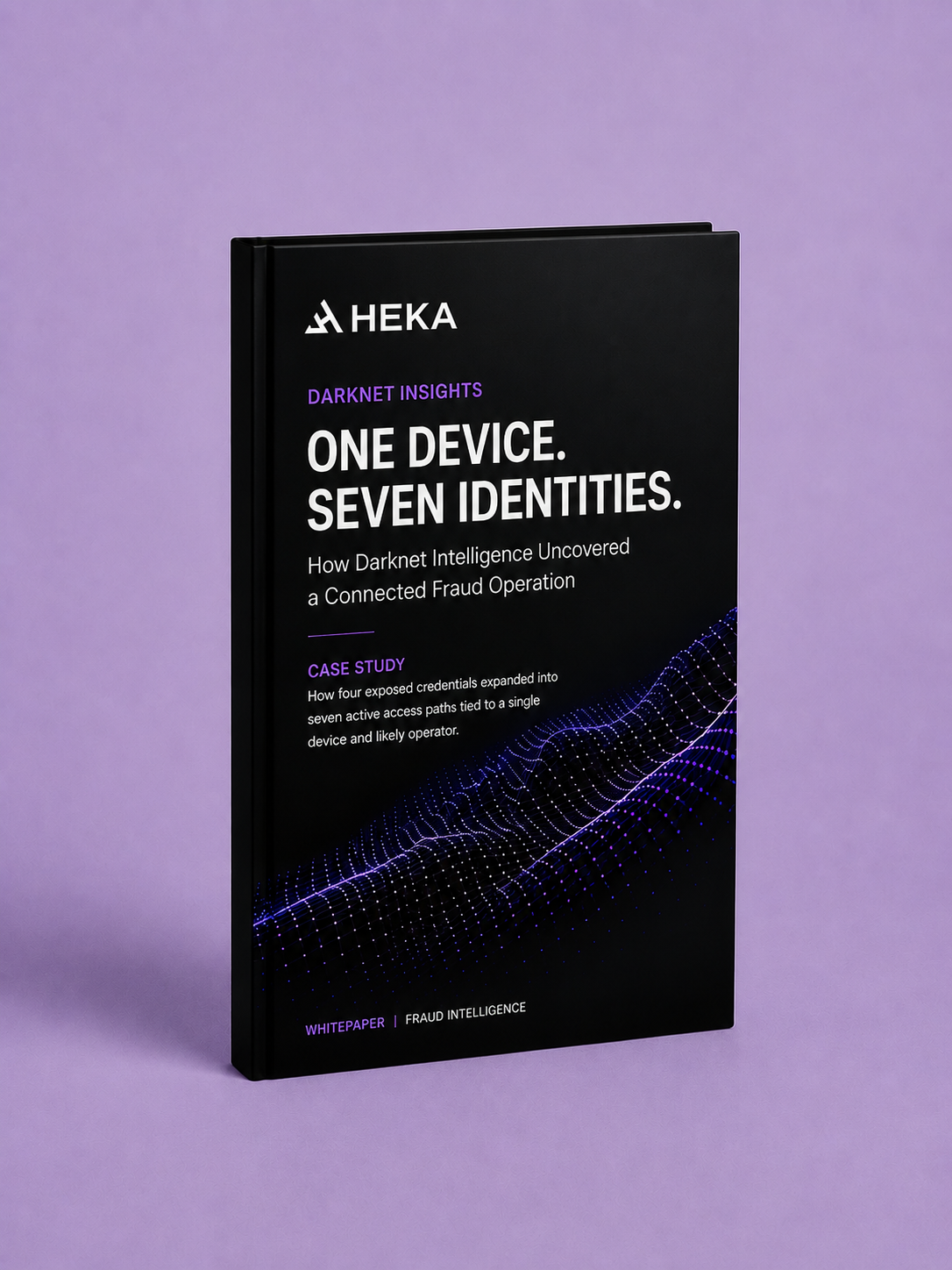
ONE DEVICE. SEVEN IDENTITIES.

.png)