Fraudsters Are Testing Your Fraud Stack Before You Do
Fraudsters Are Testing Your Fraud Stack Before You Do
AI-powered KYC simulators are turning identity verification into an adversarial feedback loop.
Fraudsters no longer have to submit an identity and hope it passes. Emerging AI-powered KYC simulation services claim to help users pre-test identity documents and selfies, identify potential weaknesses, and refine them before they ever reach a financial institution or digital platform.
The result is a fundamental shift: attackers can increasingly treat KYC like software - test, diagnose, adjust, and try again.
Inside this whitepaper:
- The New Feedback Loop: How KYC simulators can help fraudsters identify and correct weaknesses before submitting an application
- The Evolving Fraud Stack: How stolen data, generative AI, synthetic identities, verification services, and pre-testing tools can work together
- The KYC Blind Spot: Why passing document and biometric verification doesn't necessarily prove an identity is legitimate
- The Defensive Shift: How identity intelligence, adaptive decisioning, and connected fraud signals can help teams respond faster
- The Signals to Watch: Why near-miss applications, repeated attempts, and changing identity attributes may reveal attackers actively optimizing against your controls
Fraudsters are getting faster at learning what works. Download the full whitepaper to learn how your fraud strategy can keep pace.
Resource Posts
ONE DEVICE. SEVEN IDENTITIES.
One Device. Seven Identities. explores how darknet intelligence transformed four exposed credentials into a wider fraud investigation, uncovering seven active access paths linked to a single device and likely operator. Discover how identity and device correlation can reveal connected fraud networks hidden behind seemingly unrelated accounts.
.png)
Account Takeover, Inside a Trusted Account
A trusted customer account can appear legitimate even after the identity behind it has changed. See how Heka connects digital footprint, breach, phone, and behavioral intelligence to uncover the warning signs traditional fraud controls miss.
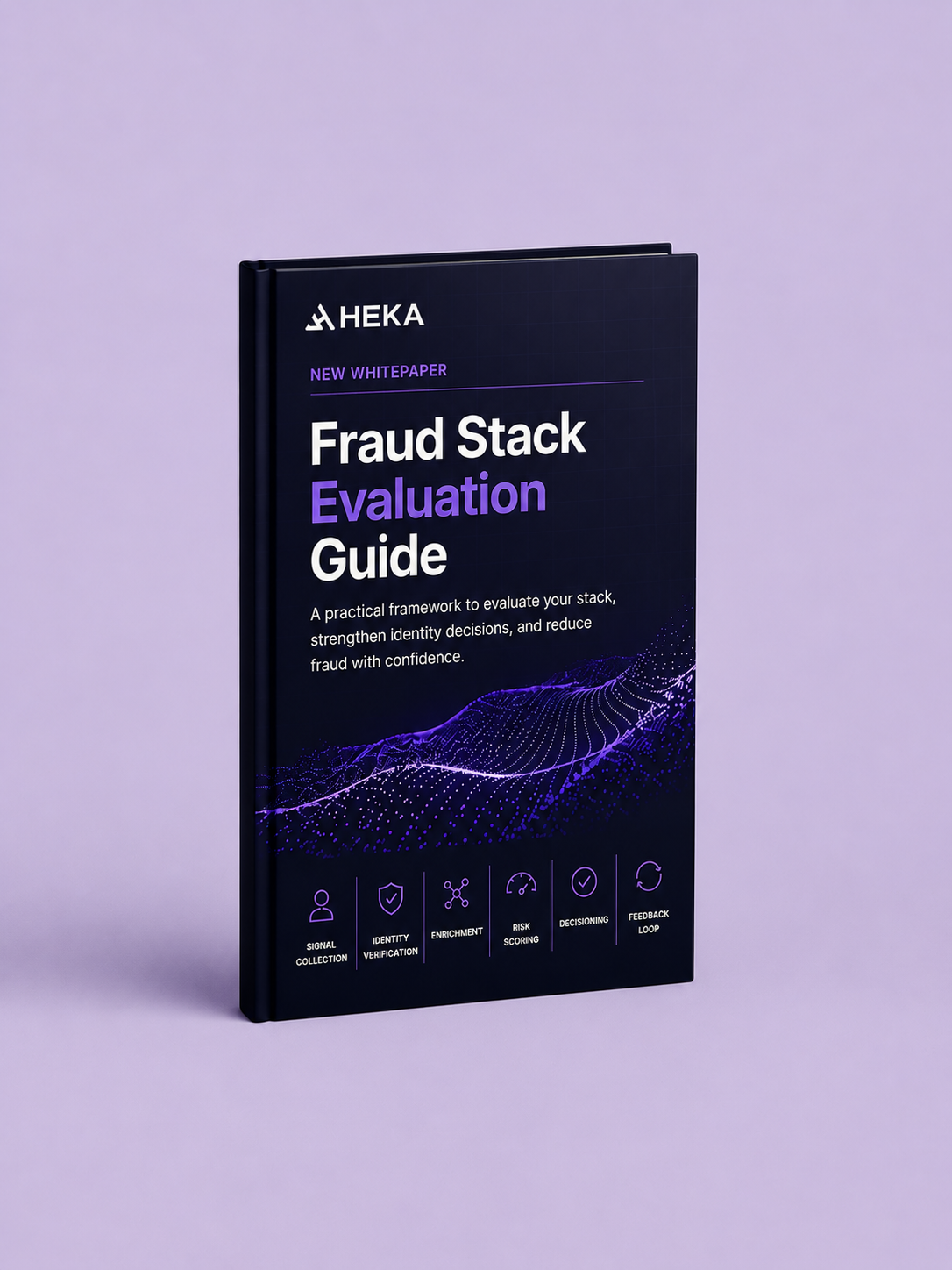
Rethinking the Fraud Stack: A Framework for Stronger Signals and Better Decisions
Most fraud systems don’t fail from missing pieces, they fail by trusting weak signals. Even when identities appear “verified,” hidden gaps allow fraud to slip through. This whitepaper explores where modern fraud stacks break, why deceptive identities pass, and how deeper identity context can reduce risk without adding friction.