ONE DEVICE. SEVEN IDENTITIES.
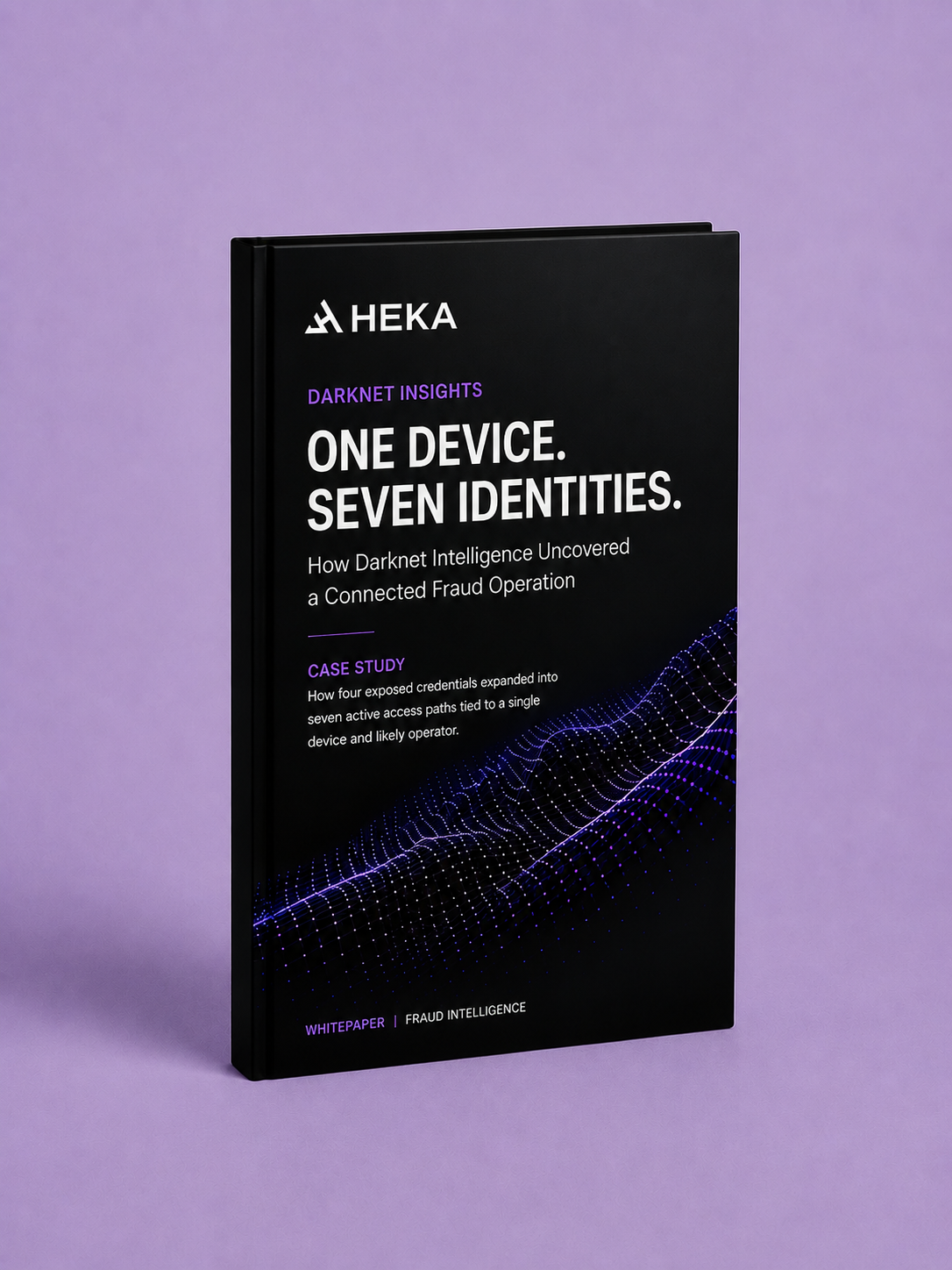
One Device. Seven Identities.
How darknet intelligence uncovered a connected fraud operation hiding behind seemingly unrelated accounts.
A credential exposure can look like an isolated security event. But when darknet intelligence is combined with identity, device, and infrastructure signals, those individual alerts can reveal something much larger.
In this investigation, four exposed accounts at a single financial institution initially appeared unrelated. Deeper analysis uncovered shared password patterns, repeated identity artifacts, identical account footprints, and common device telemetry. Expanding the investigation around that device ultimately revealed seven active access paths tied to a single device and likely operator.
Inside this whitepaper:
- From Four to Seven: How four exposed credentials expanded into seven connected identities and active access paths
- The Signals That Connected Them: How password patterns, identity artifacts, account footprints, browser data, and device telemetry revealed a common operation
- Beyond Credential Monitoring: Why darknet intelligence becomes more powerful when used as relationship intelligence rather than a list of compromised passwords
- The Fraud Implications: How connected signals can reveal account takeover, synthetic identity, first-party fraud, and cross-institution risk
- The Investigative Shift: Why fraud teams should investigate clusters of connected identities instead of treating each compromised account in isolation
- The Defensive Playbook: Practical steps for using device-centered expansion, identity correlation, and cluster-level escalation to uncover broader fraud activity
One compromised credential may only be the starting point. Download the full whitepaper to see how darknet intelligence can uncover the wider operation behind the account.
Resource Posts

Fraudsters Are Testing Your Fraud Stack Before You Do
.png)
Account Takeover, Inside a Trusted Account